

REDUNDANCY IN SPACE
The Problem
There’s one piece of advice you get all the time as a fledgling indie studio; “Playtesting is really really really important.” It comes attached to every conversation we have with industry vets, publishers, agents and so on.
Though it’s tempting to hide early builds out of shame because “It’s not done yet!”, doing so leaves you with something only you understand. If you want it to be good, you have to send your monster out into the world.
With Contact Protocol, that meant listening to a lot of “Wait, what?” and “Who’s that?” and “Why is there a red thingy moving toward the green thingy?”
For mechanics, the proper solution is a tutorial and UI that organically teaches the player how to interact with our systems. As a job simulator with (sometimes) intentionally arcane UI, it’s an ongoing struggle to find the balance. We’re, uh… we’re working on it.
To combat narrative amnesia though, we’ve done the obvious thing, and taken inspiration from a first person zombie shooter.
When making Left 4 Dead, Valve had an issue where the gameplay was so manic and engaging that people would miss key information: that is, locations of other players, special enemies, objectives, approaching swarms.
So, they applied a very maximalist design philosophy. For them, it wasn’t enough to give the information with a tooltip. They threw the kitchen sink at it with colour coded outlines, sound cues, dialogue barks, and text flashing up on the screen, making sure players got the information they needed through as many pathways as possible.
You’re approaching one of the special enemies - a witch. First, you hear a distinctive crying sound. Then, one of the characters will shout out: “witch!” If you don’t take the hint, you get a special animation and an escalating scream, and finally you get a middle-of-screen warning symbol with “You startled the witch” right where your eyes can’t miss it. Clear as day.
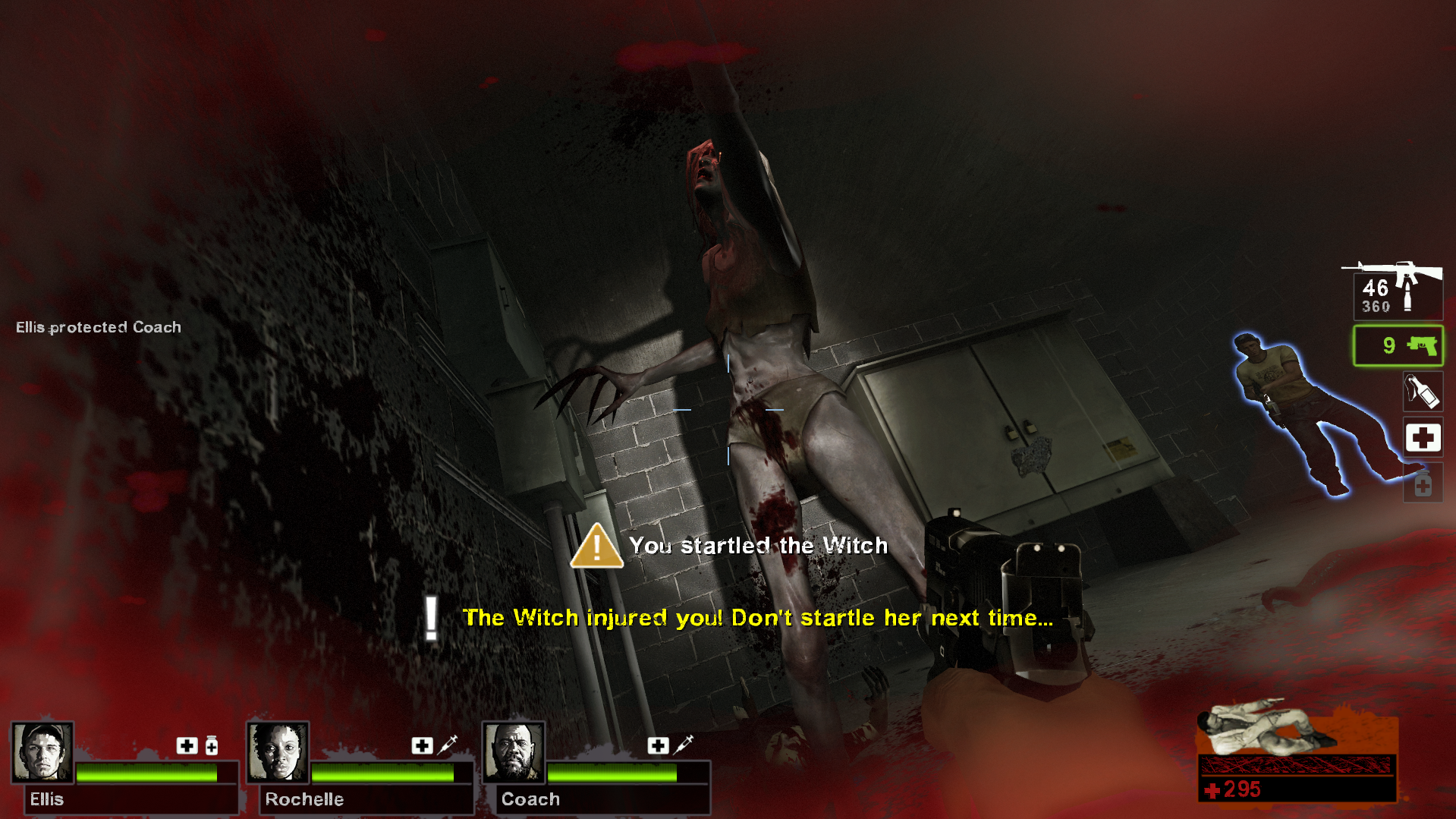
Eeeeek!
But what’s this got to do with an atmospheric and tense investigation game?
Redundancy
Because the narrative fluff in ConPro often isn’t just narrative fluff, we have to treat it with care, because we don’t want our players sleepwalking into ambushes or key story beats any more than Turtle Rock wanted people to sleepwalk into witches. That is to say, we want it a little, but we want it to be earned.
Originally, we were only working with character conversations and company bulletins. You’d get an urgent order from Corporate and then maybe someone would talk to you about it, done. But as the world and lore of Contact Protocol grew organically around the main gameplay loop, we realised we needed other ways to stay attuned to the goings-on in the solar system.
First, a crew-member might invite you to their office to discuss the latest order from Corporate. They might even ask how you want to interpret that order. If you’ve been nice to them, they might listen.
Second is through ship encounters. The spaceships of ConPro are run by people: lonely, chatty people. In many ways, this is a game about gossip, so you’re going to hear a lot of stuff people heard from a friend of a friend. You don’t generally need to listen or trust this information, though.
Finally, is through more static narrative means. Newspapers, corporate bulletins, spam flyers, and space-mails. Anyone in the universe can send out faxes into the void and if your machine picks it up, it will print it off. Your crew can (and will) message you on the ship’s intra-mail. Sometimes to tell you important stuff, but sometimes just to whine about the smell of cat food in the mess hall.
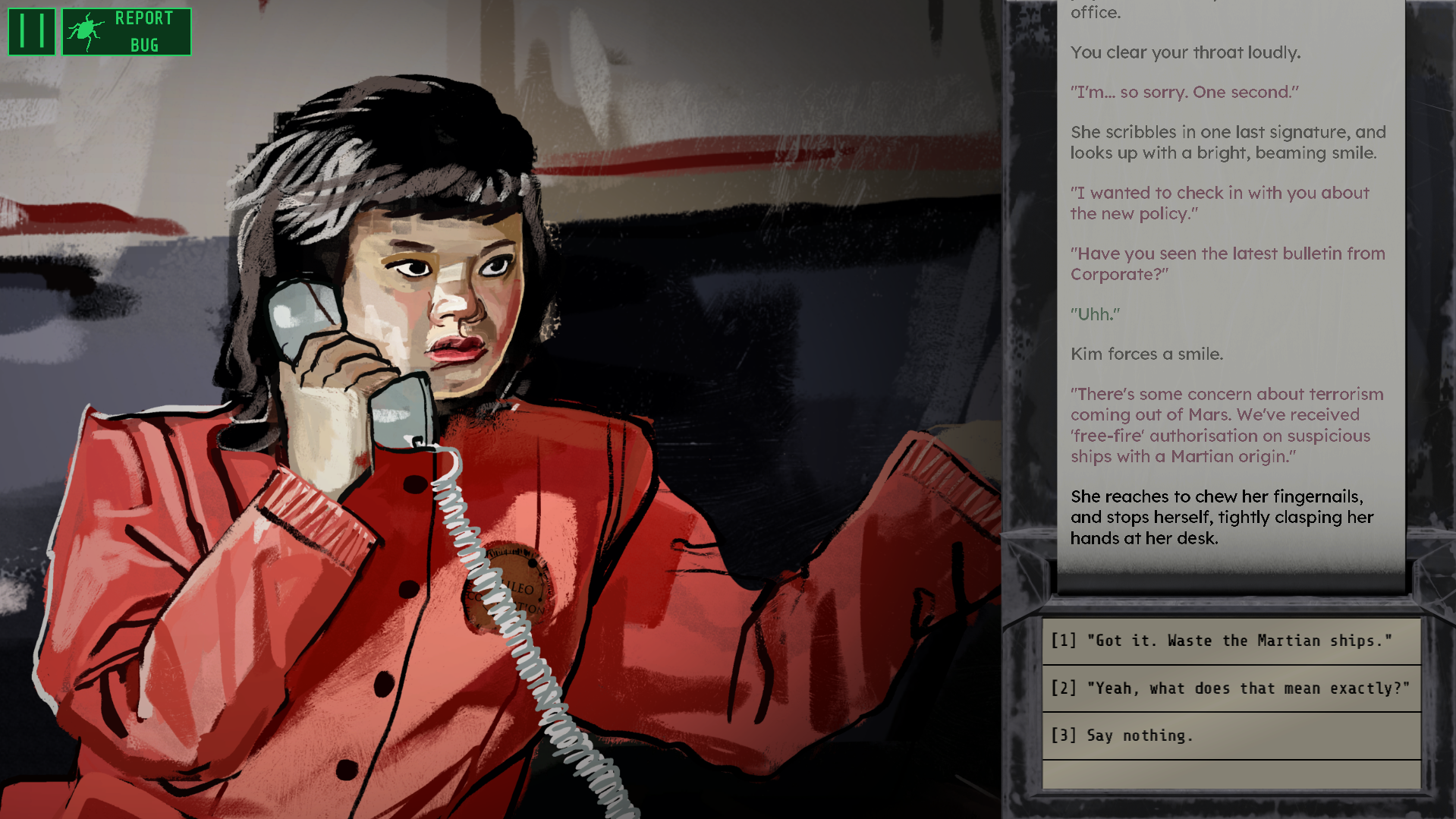
Here, Kim talks to us about a ‘free-fire’ order against Martian ships
Now, if the game doesn’t meet our standards, either in tension or engagement with the player, we can fix it with any of these touchpoints. We want to set up our employers as an out-of-touch mega corporation? Let's have an auto calendar email come through with a poem about world peace :). The game doesn’t feel tense enough? Here’s a fax about corporate assassin hit squads on the station you’re docking at next week.
Now that you know our secret, you’ll see lots of this in the full game. Of course, we don’t want it to be too clear, so sometimes these information channels won’t all agree. But that’s fine, right? You can tell when someone’s lying to you, can’t you?
More Faxes!
The fax machine also has its own micro-ecosystem. Since you’re able to receive 3 types of faxes, we use the machine to tweak how hard we want to hammer something into the players heads.
For example, the first stop on your journey is a space station in orbit around Mars called Laika. In early playthroughs, it felt a little weird when you just suddenly…turned up. Where is this place? Why are we here? It made sense, but it felt confusing and disconnected
So, in the first leg of the journey, we start drip-feeding Laika into the game. You’ll get a Flamingo news bulletin about a murder on the station. Then, a corporate bulletin about your expected behaviour when you arrive. Finally, when you’re a few days out, you start getting spam faxes from Laika herself. Like this advert for the bar on the station:
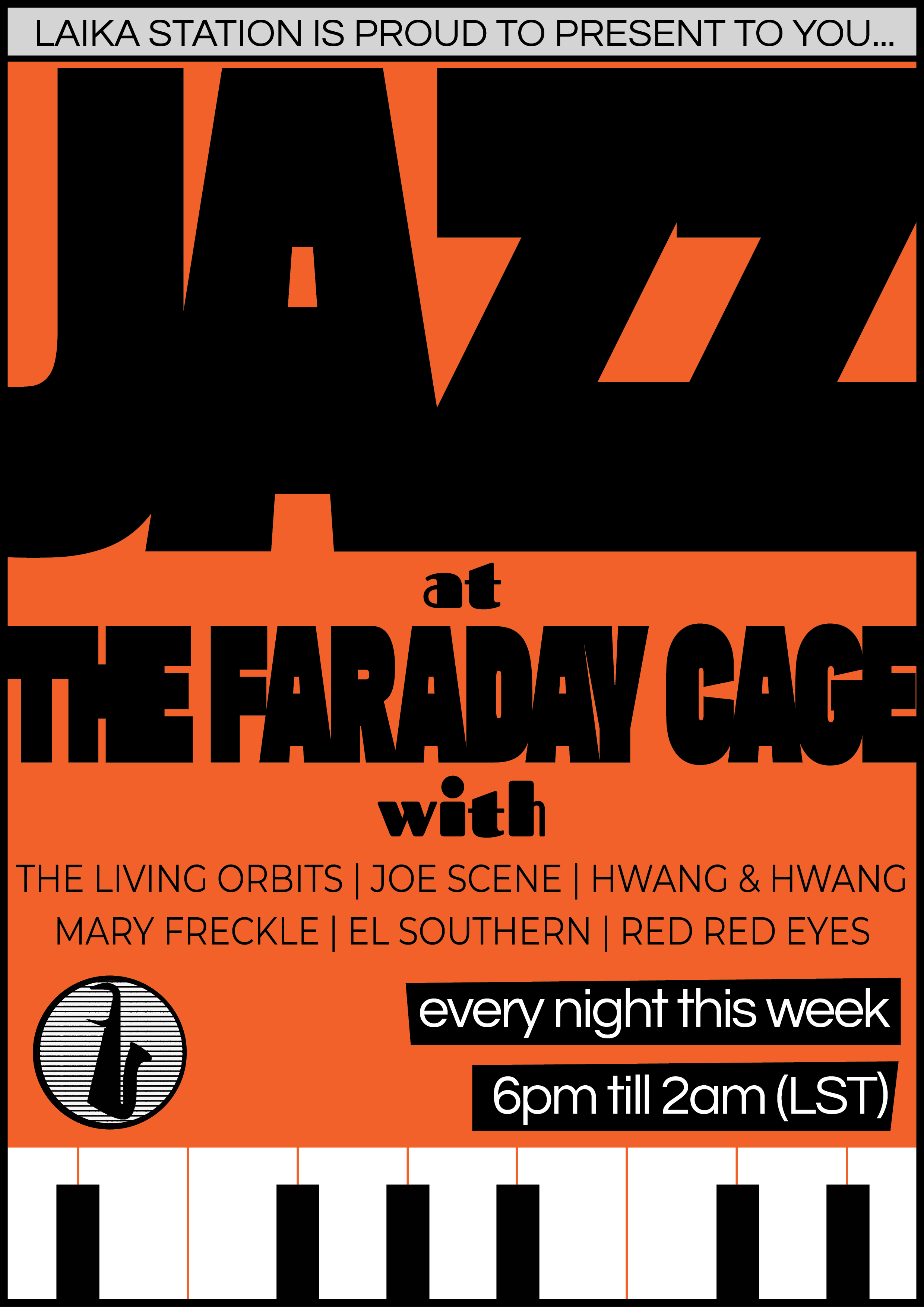
The music is Great!
The drinks… not so much.
This way, the player is able to nestle themselves in this world as they slowly learn about it through various channels. By the time you get there, it feels right. It feels expected.
Where do we go from here?
Tweaking these touchpoints of information is a challenge, and will continue to be as we playtest Contact Protocol. For a developer, no stone is unturned. We know all the inner workings of the mechanics and plot. What might seem obvious to us is often confusing to the average player.
But we’re confident we’ll get there - the reactions thus far have already been amazing. We love seeing streamers read flyers about martian politics, furrow their brows, and start picking sides in their heads. We have so much more story and complexity and branching choices in the full game and we’re chomping to fling it at you.
Until then… stay vigilant in the space lanes :)
- Cold Zephyr Games
